Role
Product Designer
Company
Independent Case Study
Year
2025
When You Don’t Know What to Cook

That daily paralysis in front of an open fridge isn’t a small personal quirk — it’s a repeating pattern that millions of people deal with every single day. And it’s a gap no one in the market has closed.
A Familiar Kind of Stuck
You want to cook. You have ingredients. But you’re standing in front of the fridge, and nothing comes to mind. No idea, no recipe. Just a quiet mental blank that feels oddly familiar.
Ten minutes later, you’re ordering food delivery.
This isn’t a fluke. It’s a pattern — one that plays out every evening for millions of people across Iran. And every time it happens, a moment that could have been something else slips away.
I started with a simple question: why does cooking at home feel like such a hassle? The answer, it turned out, wasn’t simple at all.
When I asked, the answers surprised me
I designed a survey — not to confirm what I already thought, but out of genuine curiosity. 16 people responded.
One number stood out above everything else:
81% of respondents said their biggest cooking challenge was simply not knowing what to make — not lack of time, not lack of skill. Just the decision itself.
What made this striking was who these people were. 75% said they enjoy cooking. 38% cook four or more times a week. This wasn’t a skill problem — it was a daily decision fatigue problem.
Another question uncovered something I hadn’t anticipated: 44% said they don’t know how much of each ingredient to buy.
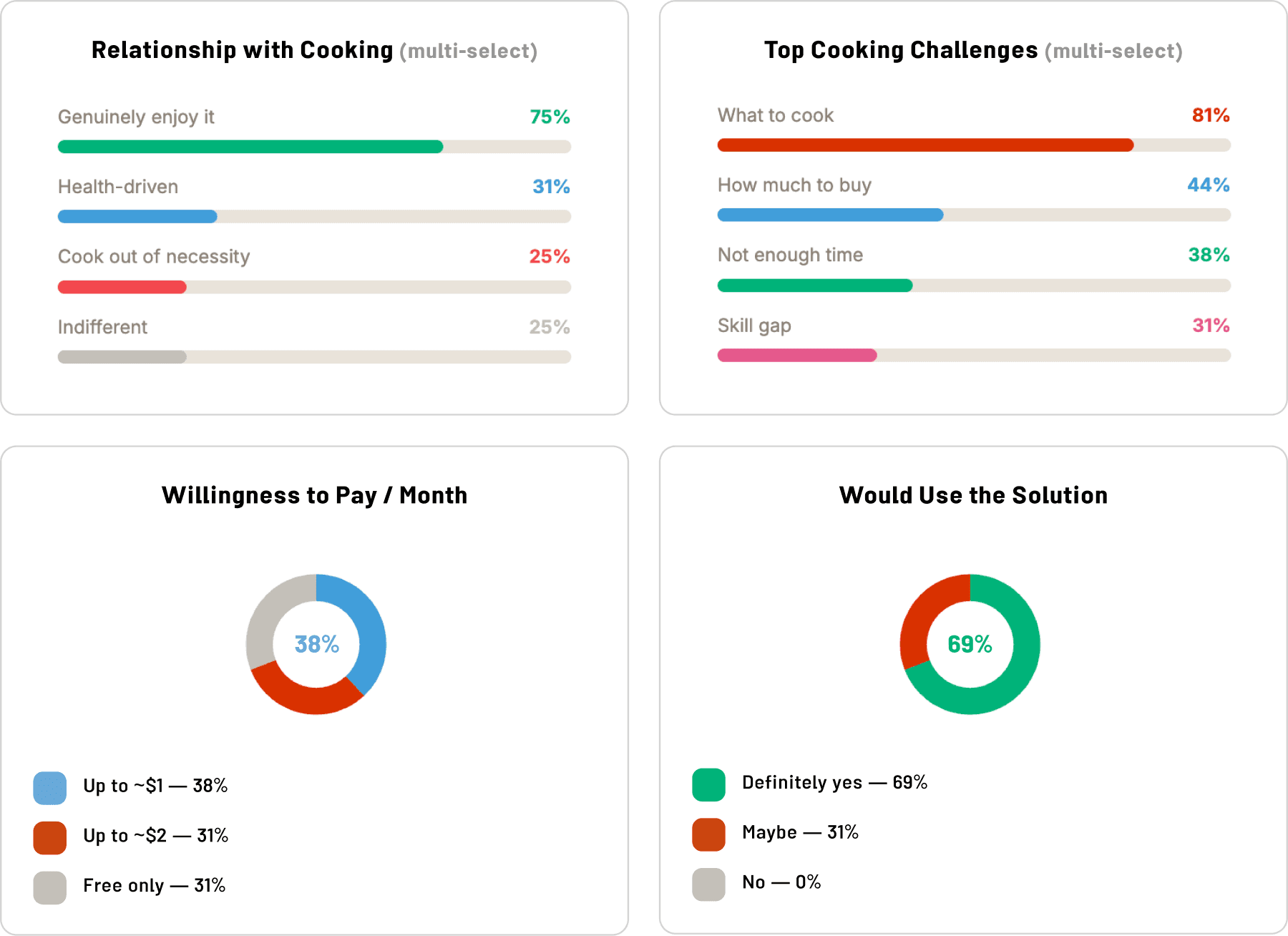
There was one more finding I almost skimmed past — and then realized it was the most important one. 38% said they regularly overspend on groceries, and another 38% said they buy too much and end up wasting food.
Why does that matter? Because it showed the problem goes deeper than just “what to cook.”
When you shop without a plan — online or in-store — you get lost in a fog of choices. Everything looks appealing, nothing feels right, and you walk out with more than you needed.
These People Are Real
Four behavioral patterns emerged from the data. Not from assumptions — from the answers themselves. One of these personas wasn’t in my original framework at all. The data found it.

What’s Actually Causing This?
When I laid the data out, something became clear that I hadn’t considered before: the tools already exist. There are Persian recipe sites, online grocery delivery, and YouTube cooking channels. So why is the problem still unsolved?
Because none of these tools talk to each other. A user has to find a recipe on one site, mentally convert it into a shopping list, go buy the ingredients — whether in person or online — then discover half of them aren’t available or don’t fit their budget, and start all over. That friction wears people down until they just open a food delivery app.
The problem isn’t content. It’s the missing layer between “I want to cook” and “I have everything I need.” Nothing connects those two moments.
Here’s what the market currently has — and what it’s missing:
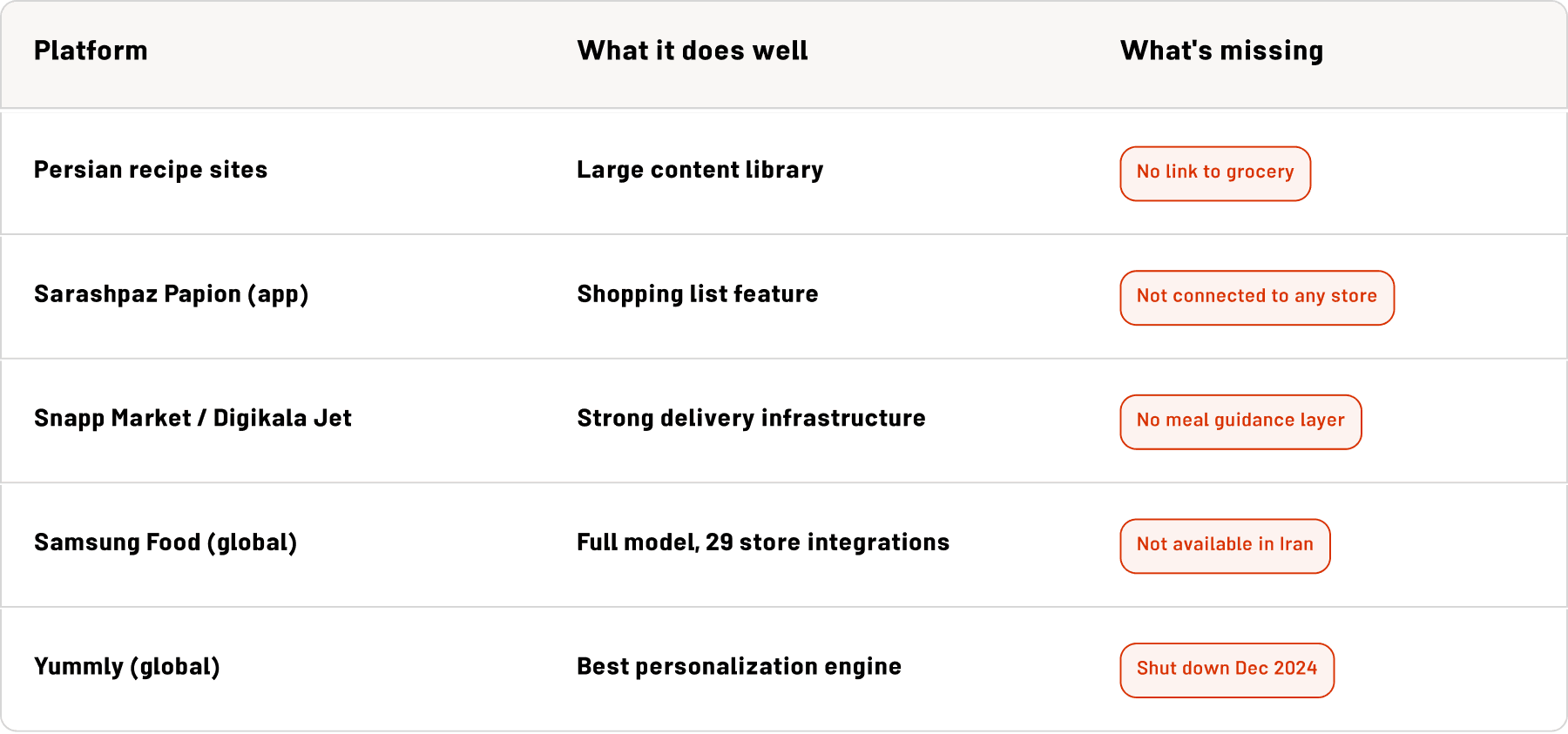
Yummly’s closure is worth pausing on. The most advanced recipe personalization platform in the world just left the market, which means even globally, there’s a gap now. In Iran, where none of these platforms ever had a presence, the opportunity is even larger.
The Solution: Connecting Pieces That Already Exist
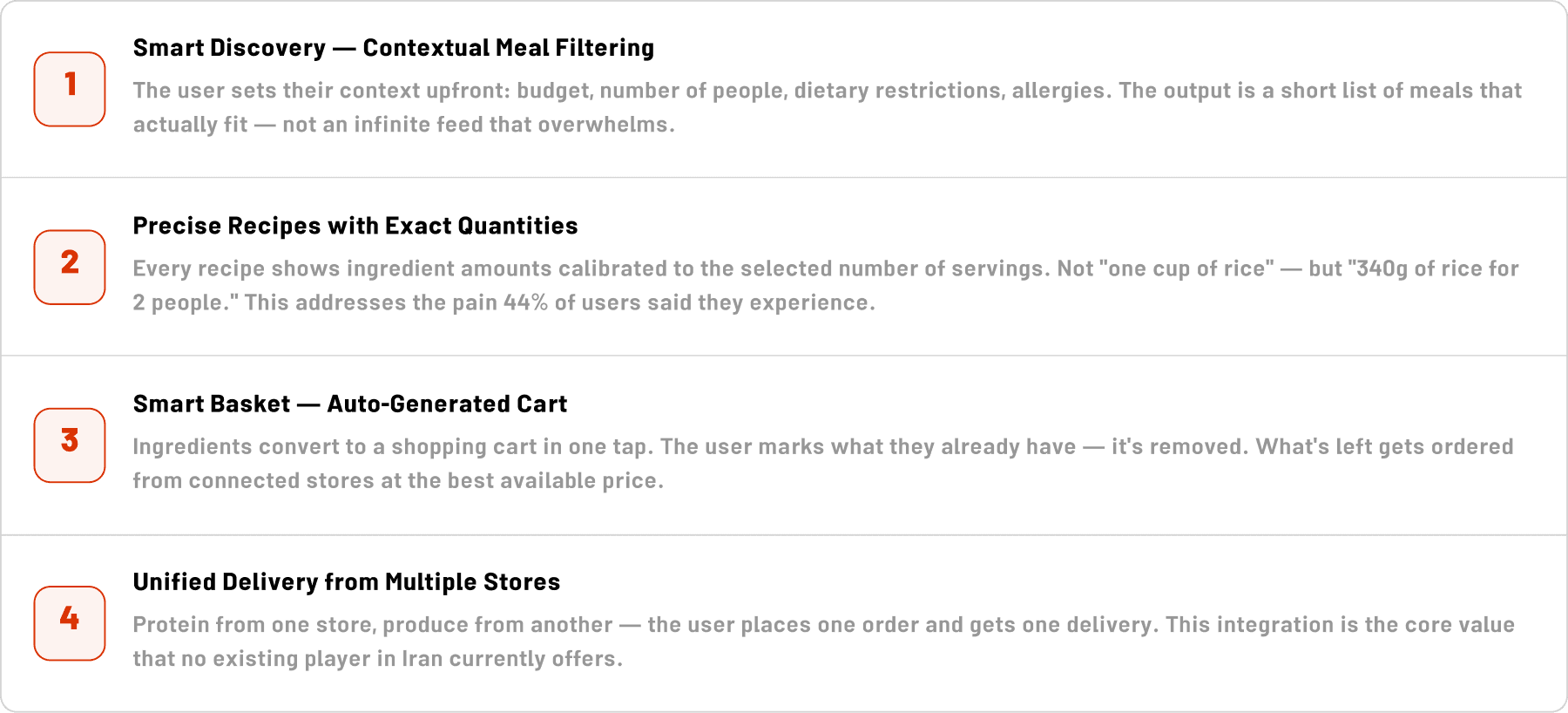
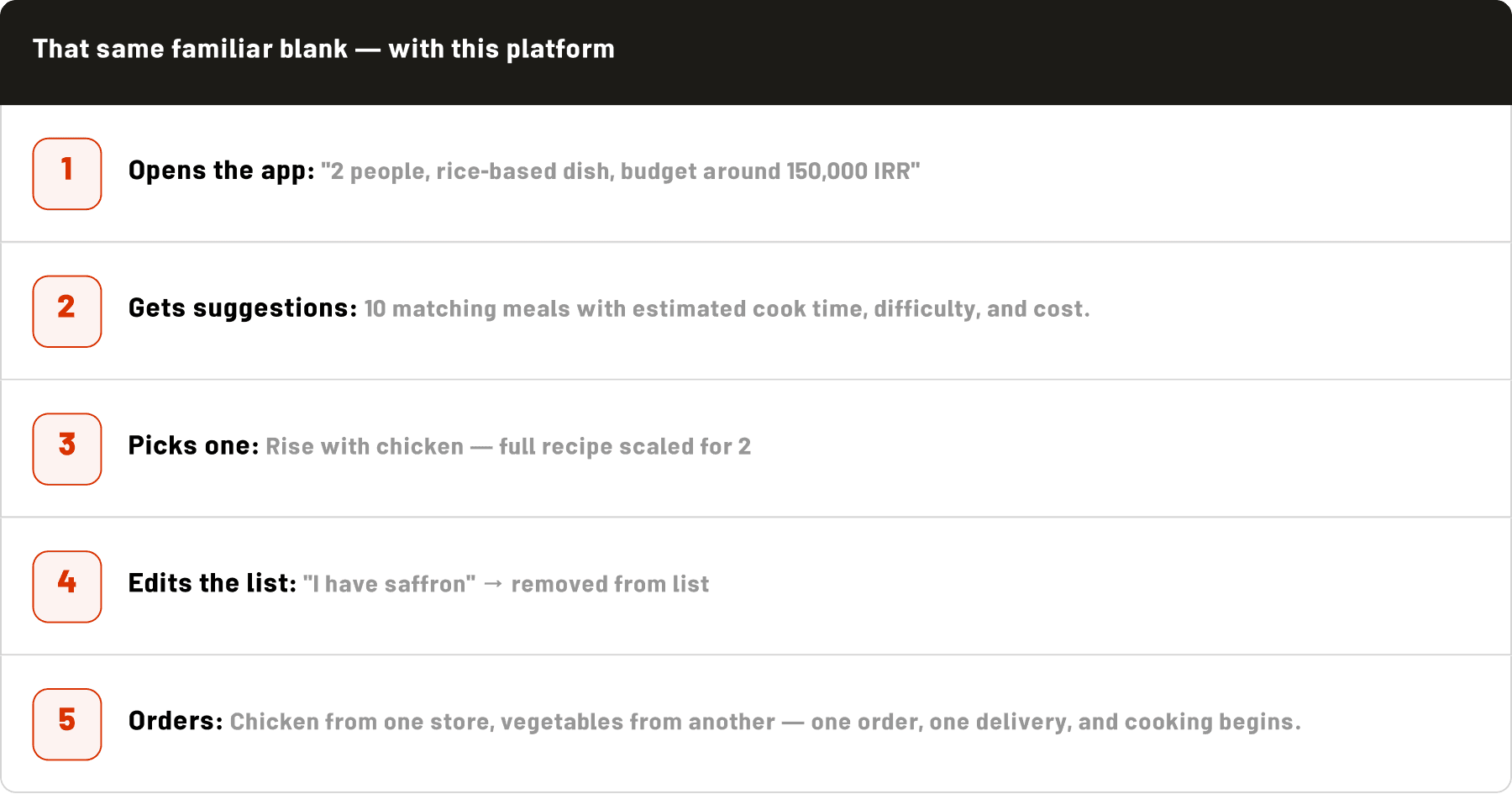
The idea is to place a smart layer between “I want to cook” and “I have my ingredients.” Not a new app built from scratch — a feature set that can sit on top of existing infrastructure.
How Big Is the Market?
Before asking “who should build this,” it’s worth understanding what we’re building toward.

Online grocery penetration in Iran sits at 5.7% today — with potential to reach 10% by 2028. This market isn’t just large. It’s still early, still growing, and still unsaturated.
Who Should Build This?
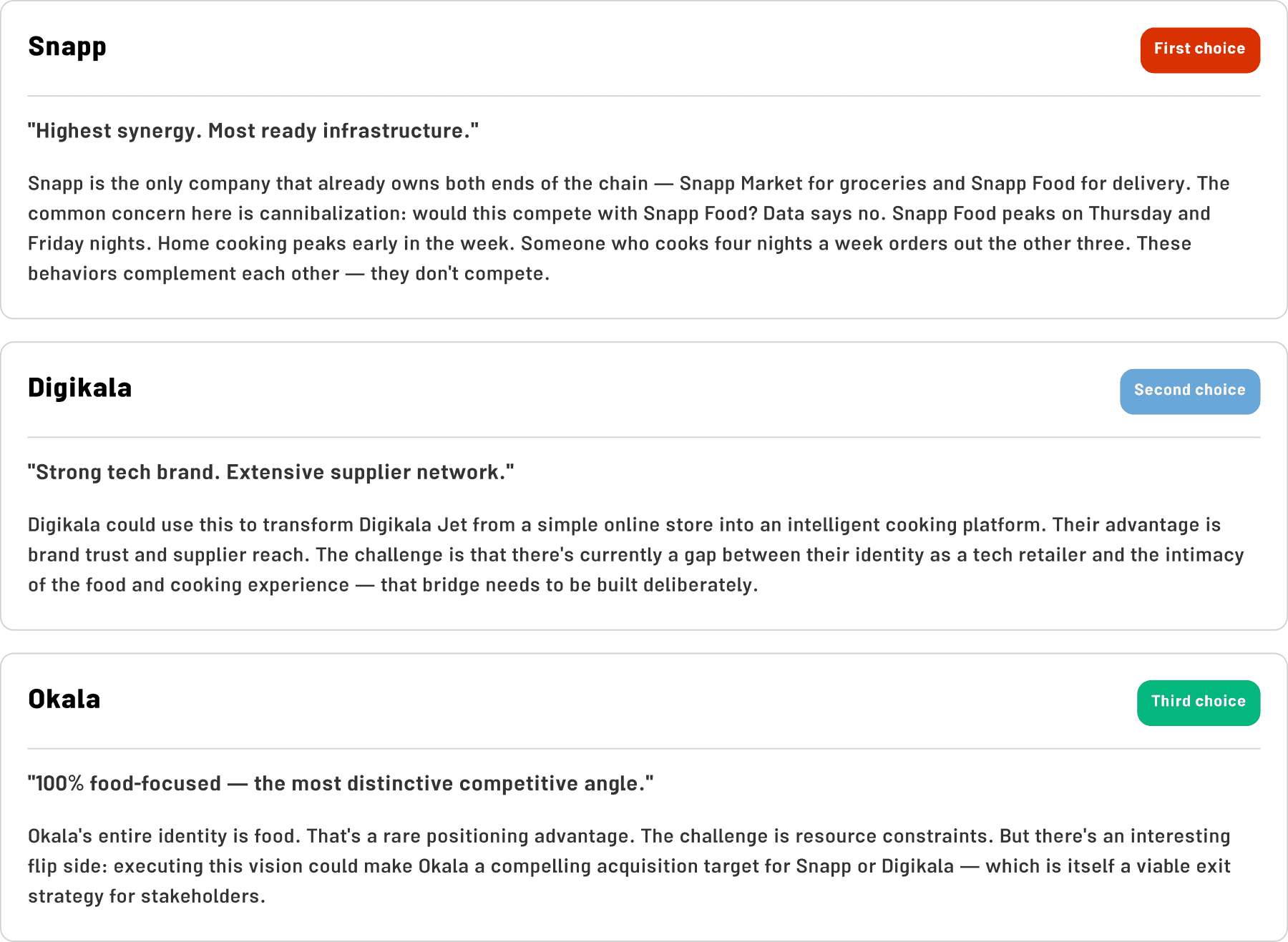
This isn’t something you can build from zero. It requires logistics infrastructure, user behavioral data, and a merchant network. Three companies in Iran already have those assets — but they’re not equal.
If It Works — Why Can’t Someone Just Copy It?
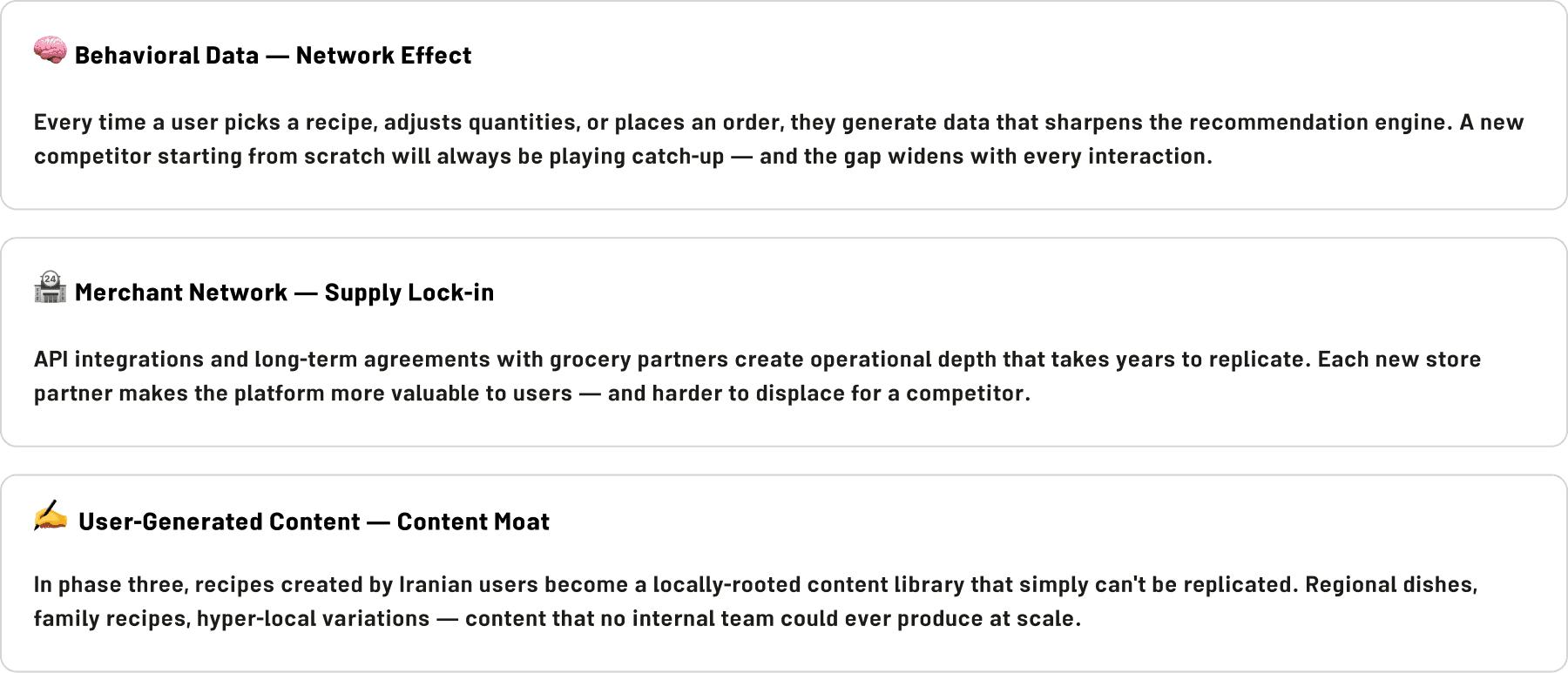
This is the question that should come before launch, not after. Single-feature platforms get copied. But this platform builds three compounding advantages that get stronger over time, not weaker.
Why Now?
This question matters more than “Will this work?” The business model is proven — Samsung Food is living proof. The demand is real — the data confirms it. The question is why this window is open right now.
Four things happened at once:
First: Yummly shut down in December 2024. The world’s most sophisticated recipe personalization engine just exited the market — leaving a global gap.
Second: Online grocery shopping in Iran has become normal. Snapp Market and Digikala Super have already changed user behavior — the biggest adoption barrier has been removed.
Third: Domestic competitors haven’t moved yet. This feature doesn’t appear on anyone’s roadmap.
Fourth: The model is de-risked. This isn’t an experiment — it’s the
localization of a proven formula with significantly lower risk than a completely novel idea.
The question is no longer whether this idea works. It’s which company moves first.
The Real Challenges — Worth Naming
Any case study that only talks about opportunity isn’t worth trusting. Here are three real challenges that need answers before this goes anywhere:
The cold start problem: Without enough recipes, users won’t come. Without users, recipes don’t get created. The answer: In phase one, content is produced by an internal team or through partnerships with cooking influencers. UGC comes later.
API dependency: If a grocery partner pulls back their real-time inventory data or sets difficult terms, the whole chain breaks. For Snapp, this risk disappears because the store is part of the same ecosystem. For others, long-term contracts and equity partnerships are the answer.
Cold start recommendation engine: Early on, there’s no behavioral data to power smart suggestions. The fix is to start with simple filters — budget, serving size, dietary type — and let the engine become intelligent as data accumulates.
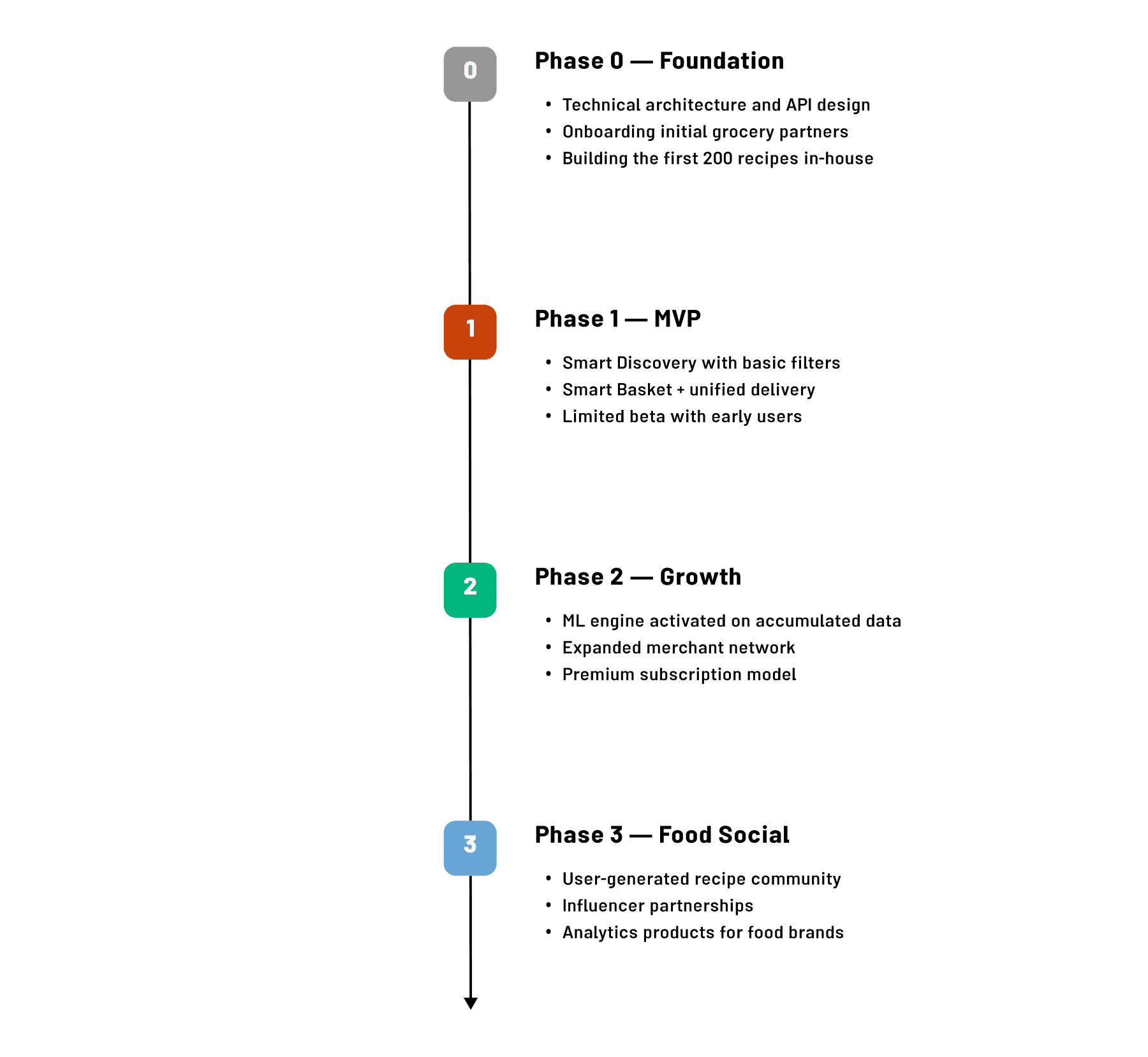
From Idea to Product
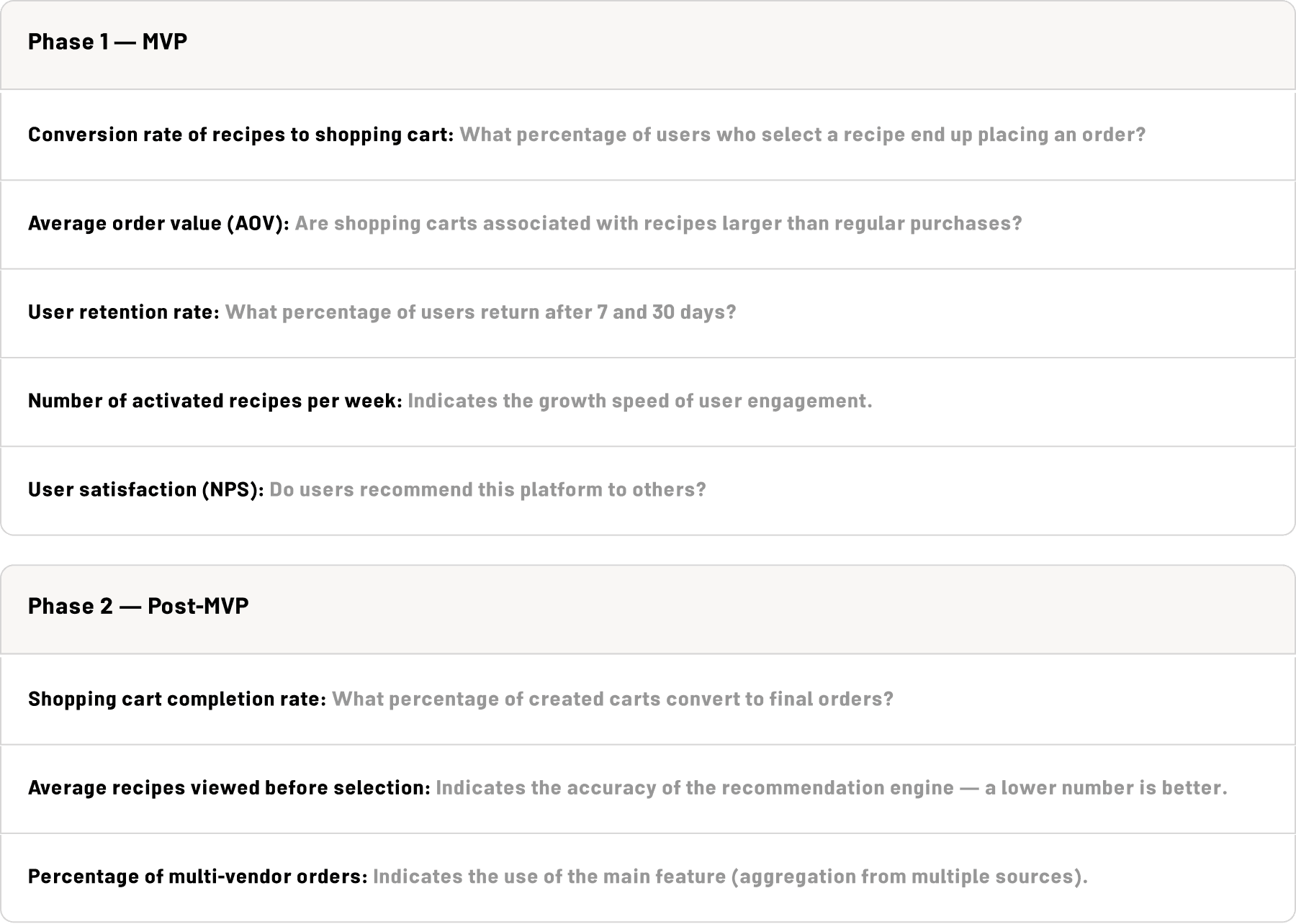
KPIs